



















Energy is the new currency of mobility. In the age of electric mobility, autonomous driving, and digitally networked vehicle functions, the automotive industry faces the challenge of providing ever more electrical energy safely, efficiently, and flexibly – while at the same time facing increasing cost and development pressures.
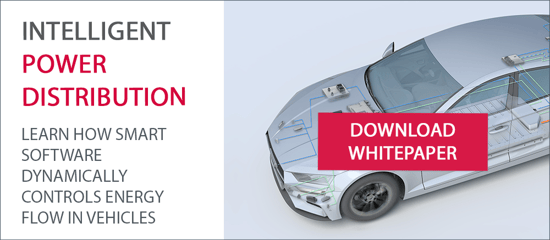
With the RACE project (Revolutionary Approach Controlling Energy), EDAG presents an approach that masters precisely this balance: intelligent, software-controlled power distribution that revolutionizes energy management in vehicles.
The biggest challenge here is the increasing energy consumption of modern vehicles. Autonomous driving, smart comfort functions, and digital assistance systems require powerful energy distribution .
However, traditional approaches to meeting this demand are reaching their limits: Larger DC/DC converters, more powerful batteries, and thicker cables mean more weight, higher costs, and a more complex architecture.
This is exactly where the RACE approach comes in – not more hardware, but more intelligence.
Software instead of oversizing
At the heart of the solution is software-based power distribution that analyzes and actively controls the energy requirements of all consumers in the vehicle in real time.
Instead of designing the components for maximum load, the system continuously calculates how much power is actually needed and where reserves exist.
A so-called handshake procedure ensures that consumers with high energy requirements, such as air conditioning units, submit their power requests to the energy management system. The system then decides whether to release, reduce, or temporarily postpone the power. The process, for which EDAG has applied for a patent, thus creates flexible, priority-based load distribution and is intended to make an important contribution to efficient power distribution in the vehicle.
This is completely transparent to the user: comfort and safety remain unrestricted, while the system creates an optimal balance between power demand, thermal load, and energy efficiency in the background.
The smart power distributor as a control center
The smart power distributor plays a central role. It acts as an interface between control devices and consumers and takes over monitoring and local thermal management.
Through continuous monitoring and the calculation of thermal models, the system detects potential overloads before they occur – and takes targeted action to counteract them. This allows the power consumption of individual consumers to be reduced locally without affecting overall performance.
The result: dynamic, load-optimized energy distribution that does not require oversized hardware.
.webp?width=1920&height=1008&name=Headerbild%20Landingpage%20RACE%20(1).webp)
Flexibility through networking and parameterization
A particular advantage of the RACE system is its scalability. Since power distribution is software-controlled, it can be quickly adapted to different vehicle architectures via parameterization – without the need for costly redevelopment.
Whether passenger car, commercial vehicle, or special-purpose vehicle: the solution can be integrated into existing systems in a very short time through the use of simulation and a flexible software architecture.
The development process also benefits: hardware and software concepts can be validated virtually in advance and tested in physical test setups.
This accelerates the market launch of new technologies and significantly reduces development and production costs.
Added value for manufacturers and end customers
Intelligent power distribution offers enormous advantages for manufacturers:
- Reduction in material and development costs
- Lower system weight
- Shorter development cycles
- Easier integration into different vehicle platforms
For end customers, this means greater reliability, more comfort, and maximum energy efficiency—without any noticeable restrictions, even under high loads.
Whether safety-critical driver assistance and x-by-wire systems or energy-hungry comfort consumers: all systems are supplied with energy as needed. Intelligent energy management remains invisible but is always active.
Conclusion
The future of vehicle energy supply lies not in larger batteries or more powerful cables, but in the intelligent networking of hardware and software.
With the RACE system, EDAG demonstrates how software-controlled power distribution is becoming a key technology for sustainable mobility: it reduces weight and costs, increases efficiency and safety – and paves the way for next-generation energy management.
If you have any further questions about "RACE" and intelligent power distribution, please feel free to contact our expert Tobias Meister, Senior Software Engineer, at any time. Or download our white paper "Efficient Energy Supply through Intelligent Power Distribution" directly here.