



















Why Maintenance, Service, and Data Context Are the Most Sensible Starting Point
When a malfunction occurs in production, there is rarely a lack of information. Often, the opposite is true. Process data is available, as is experience from similar cases, along with documentation, spare parts information, and service expertise. The real problem is that this information is not available in a usable context at the crucial moment.
This is precisely where the concept of a smart ecosystem becomes tangible for manufacturing companies—not as a buzzword for just any digital platform, but as a very practical question: How can data, services, and digital functions be integrated so that maintenance, service, and production teams can act more quickly, more reliably, and with greater confidence?
A smart ecosystem connects physical products or production environments with digital services, data, user-oriented interfaces, and a robust technical infrastructure. This transforms individual digital functions into end-to-end solutions that deliver measurable added value for production, service, and users.
A production-oriented approach for tangible added value
Smart ecosystems can generally be conceived in two forms. On the one hand, they create added value for customers and users by expanding existing products with digital services, portals, additional functions, or data-driven offerings. On the other hand, they help companies make internal processes in production, service, and maintenance more efficient, improve access to information, and accelerate decision-making.
For medium-sized industrial companies in particular, this second approach often offers the most sensible starting point.
The reason is simple. In production, the need is usually clear, the benefits are measurable, and the case for implementation is technically sound. When a digital solution shortens response times during malfunctions, improves equipment availability, or reduces the analytical effort required for maintenance, it creates a direct operational impact. This is precisely what makes production-related use cases a sensible entry point into the topic.
What a Smart Ecosystem Actually Achieves in This Context
In a production-related environment, a smart ecosystem does not arise from a single app or an isolated dashboard. It emerges where four key areas converge and seamlessly interlock:
- the real-world production environment,
- digital functions that support specific operational tasks,
- data from processes, usage, maintenance, or quality,
- a technical foundation on which these elements work together effectively.
It is only through this integration that tangible added value—one that is noticeable in everyday operations—is created
A maintenance app alone does not constitute an ecosystem. Nor does visualization alone. What is crucial is that data from multiple sources converges, is displayed in the right context, and can be directly translated into actions or decisions.
The greatest benefit rarely lies in a single tool
This becomes particularly clear in the maintenance and service environment. When a system fails, the team doesn’t need yet another separate tool. It needs quick access to exactly the information that helps in this situation: current process data, possible causes of failure, experience-based knowledge from similar cases, references to replacement parts, or information on when external support is necessary.
When this information becomes available within a unified framework, operations improve noticeably. Malfunctions can be isolated more quickly. Knowledge is no longer confined to individual people. The basis for decisions becomes more well-founded and transparent. Digital functions then contribute not only to convenience but also to availability and efficiency.
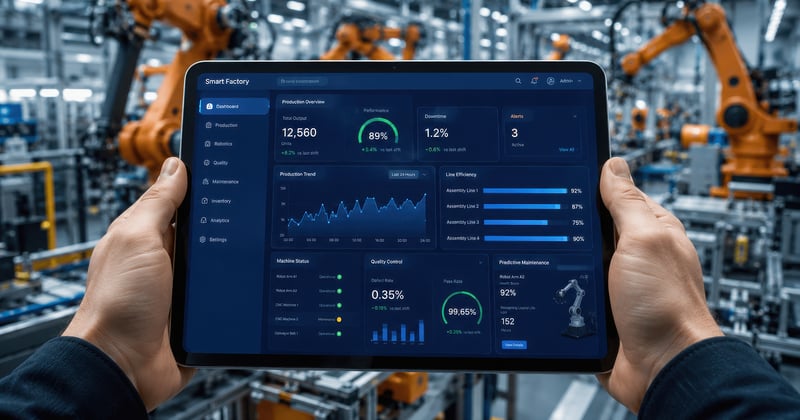
This principle also applies in other production-related scenarios. Quality data from multiple sources can be consolidated and visualized in a single application so that departments can draw conclusions more quickly and initiate actions. Dashboards only become valuable when they not only display data but also support decision-making. Predictive maintenance modules gain relevance when they are integrated into the actual service process rather than running in isolation on the sidelines.
Why Many Projects Still Fail
Many companies are already using individual digital components. A visualization here, an analytics tool there, perhaps some initial sensor data or a pilot project for predictive maintenance. The problem is often not the individual solution. The problem is the lack of integration.
If data isn’t connected to real-world roles, processes, and decisions, the next siloed solution quickly emerges. Then maintenance continues to jump between systems. Then knowledge remains scattered. Then, while digital interfaces exist, there’s no consistent benefit in day-to-day operations.
That’s why, when implementing solutions close to production, it’s not just the functionality that matters, but also integration with existing systems, operations, and future expansions. A pilot project doesn’t have to be large. It just has to be integrable.
How to Identify a Good First Use Case
A good first use case doesn’t have to be part of a comprehensive digitalization strategy. What matters is that it addresses a clearly identifiable and well-defined area for improvement within the company.
- Choose a process in which time is visibly wasted , information must be painstakingly compiled, or recurring problems disrupt the workflow.
- Determine what data is already available and what information is still missing in day-to-day operations.
- Define who will actually use the digital solution later on.
- Design the initial solution so that it remains compatible with existing systems.
- Evaluate the benefits early on using specific metrics such as response time, availability, manual effort, or service quality.
Typical candidates include fault analysis, digital maintenance support, quality visualization or data-driven decision-making tools for production and service. Such use cases are often small enough for a controlled rollout and, at the same time, robust enough to support the addition of further functions later on.
Smart ecosystems in production are also a matter of architecture
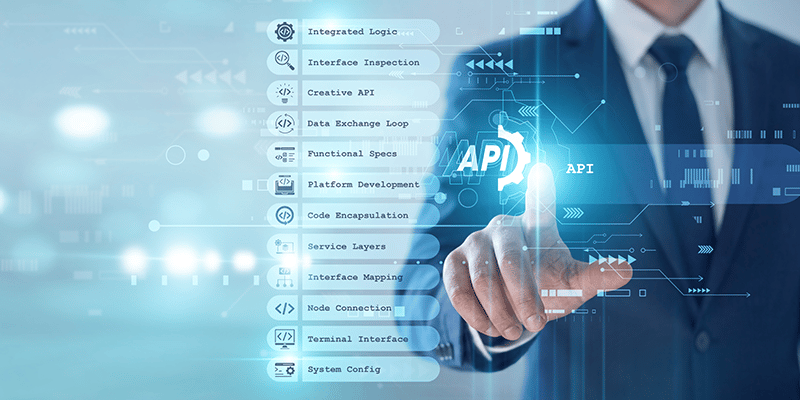
The most common misconception regarding a smart ecosystem is focusing solely on the visible interface. The dashboard, assistant, or service application is only the part that users see. Underneath lie stable and powerful microservice architectures that ensure data from various sources is processed reliably, systems are seamlessly integrated via interfaces, and functions can be delivered with high performance at all times.
This is precisely why companies must approach the topic both strategically and pragmatically. Strategically, because a successful pilot project can later grow into a sustainable digital environment. Pragmatically, because the first step does not require a fully scaled-out solution, but rather one that delivers immediate and clear operational value.
Conclusion
For many industrial companies, the path to a smart ecosystem begins with a very specific problem in production or service. This is precisely where it becomes clear what a digital environment must achieve: consolidating information, making knowledge available, accelerating decisions, and stabilizing operations.
An economically sound entry point is usually achieved through a use case that already identifies areas for improvement today and through which digital benefits can be quickly demonstrated. Those who start off on the right foot in this area aren’t just building a single application. They’re laying the foundation for a system that becomes more valuable and useful in operations with every additional feature.
Do you have questions about smart ecosystems in manufacturing? Then please feel free to contact our colleague Jana Speidel, Senior Expert Consultant.
Download the accompanying white paper, “Smart Ecosystems in Industry—From One-Time Sales to Data-Driven Value Creation.”
We’ll guide you through a process model and a practical readiness check, and use concrete examples to show you how companies can strategically translate digital solutions into tangible added value for products, processes, and services.