



















An electric, autonomous minibus for local public transport must meet economic requirements in addition to design and functionality. This requires the economies of scale offered by industrial series production. This was a key objective in the design of the HOLON urban. HOLON therefore engaged in lively exchange with EDAG's development department and prototype construction team.
Skills shortages and gaps in transport services – HOLON is addressing these key challenges in public transport with the HOLON urban . This electrically powered, barrier-free minibus for up to 15 people can drive autonomously on suitable routes.
Part of the HOLON urban concept was cost efficiency through small-batch industrial production – without compromising on safety, design, or functionality. For this reason, the experts from EDAG PS (Production Solutions) were brought in at an early stage. They dealt with the feasibility, the manufacturing concepts and the plant costs. This was achieved through intensive exchange between development, prototype construction, manufacturing and the customer's development department.
Verification of manufacturability
In classic product development, it is common for specialized teams for the respective vehicle modules to develop and optimize the associated components. However, they also need generalists who can oversee and coordinate the interaction between the individual areas. That is why EDAG PS considers every project from the perspective of constructability and clarified numerous details in advance for the feasibility of the HOLON urban.
The vehicle concept was examined within EDAG PS by specialized experts, particularly with regard to manufacturability. The aim was to ensure a design suitable for production – a key factor for subsequent series production. The examination looked at the arrangement of the components in relation to each other and the sequence of construction and assembly steps. Optimally coordinated components and processes are the key to successful industrial production.
Another focus was on the integrability of individual assemblies and components. EDAG relied on a combination of digital tools and the experience and knowledge of its employees. This enabled all components to be checked and all work steps to be planned precisely. The aim of these measures was to digitally validate the product – potential problems in installation were to be identified and rectified before production began. This "frontloading of engineering" enabled a significant reduction in development time and contributed to lower adaptation costs.
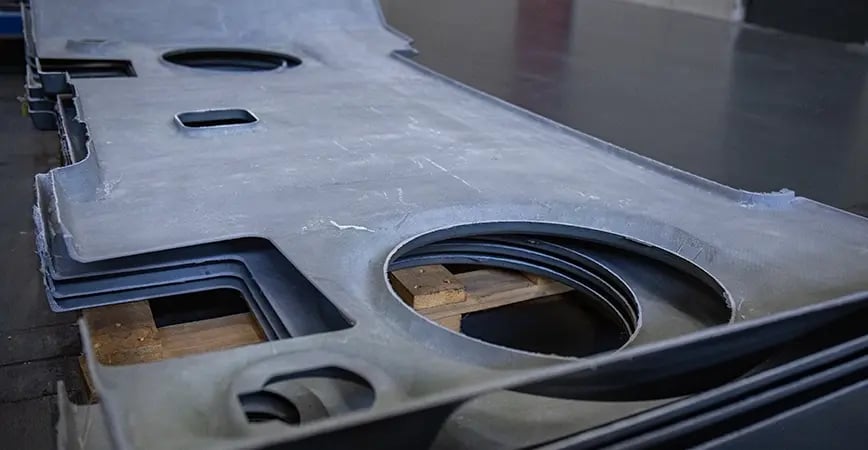
After initial product and technology tests, a production concept with framework conditions was developed. Later, the work processes could be planned and refined in more detail. Various manufacturing concepts for series production were considered in order to develop a system optimized for HOLON in terms of space requirements, system costs, and operating costs.
From vision to realization
The next step was to check all components for installability. HOLON received a list of the results and suggestions for improvement, which were coordinated with the design department. The digital tools were then used to further refine the planning. The work steps were translated into individual work stations and linked to personnel and space requirements. This made it possible to balance quantities, degree of automation, and costs.
Similar to vehicle development and validation, EDAG also relied on digital development tools, including simulations, for production planning. The digital planning tools avoided media breaks. In addition, digital twins opened up new possibilities such as virtual simulations and 3D presentations. This ensured cost-efficient production.
Efficient communication across all trades
Thanks to a functional and efficient build issue management system, deviations could be systematically recorded, evaluated, and rectified. The close integration of the individual departments under one roof in combination with the customer had a positive effect. Those responsible for prototype construction were able to coordinate directly with their colleagues from Vehicle Engineering. They always had the subsequent series production in mind and were able to consult with colleagues from Production Solutions and the customer as needed.
It is standard practice at EDAG Production Solutions to examine the product specifically in terms of constructability. Together with HOLON, the specific manufacturing and assembly processes for producing the HOLON urban have already been defined. All identified optimization potentials were bundled and discussed and further developed together with HOLON and product development. The customer benefits twice over: Not only does coordination become faster and more efficient, but the findings are also shared between departments, so that production planning, for example, benefits from the lessons learned during prototype construction. And that means fewer coordination processes.
Conclusion
Through interdisciplinary collaboration, the EDAG Group was able to make an important contribution to optimizing HOLON's vision and technical expertise . We would like to thank HOLON for their constructive and open cooperation. We look forward to seeing HOLON's vehicles make a real contribution to sustainable mobility.
Do you also need support in setting up efficient production or optimizing vehicle development? Then talk to Jörn Thoelke and Detlev Kropp from the Production Solutions department at EDAG Group. Or download our white paper "Greater efficiency in the construction of mule cars and related development steps," which provides details on the EDAG mule car concept and the advantages of integrated development.